
Selecting the perfect playground set for children requires careful consideration of age-appropriate features, safety standards, and developmental needs. Parents, educators, and community planners must understand how different age groups interact with playground equipment to make informed decisions. A well-chosen playground set not only provides hours of entertainment but also promotes physical development, social interaction, and cognitive growth across various age ranges.

The modern playground industry has evolved significantly, offering specialized equipment designed for specific age demographics. Understanding these distinctions helps ensure that children can play safely while being appropriately challenged for their developmental stage. From toddlers taking their first steps on play structures to teenagers seeking more adventurous experiences, each age group requires unique considerations when selecting playground equipment.
Toddlers aged 6 months to 2 years require playground equipment with the lowest risk factors and highest supervision capabilities. Safety surfaces must extend at least 6 feet in all directions from equipment, and fall heights should never exceed 4 feet. The playground set components for this age group should feature enclosed platforms, wider steps, and barriers that prevent falls while allowing adult supervision.
Materials used in toddler playground areas must be non-toxic, splinter-free, and designed with rounded edges. Equipment spacing becomes crucial, as toddlers may not understand spatial relationships or potential hazards. All openings should be either smaller than 3.5 inches or larger than 9 inches to prevent head entrapment, following strict safety guidelines established by playground safety organizations.
Children aged 2 to 5 years can handle slightly more challenging playground equipment while still requiring significant safety measures. Fall heights for this age group should not exceed 4 feet, and platforms higher than 30 inches must include protective barriers. The playground set design should incorporate age-appropriate climbing challenges that develop motor skills without creating excessive risk.
Preschoolers benefit from equipment that encourages imaginative play, such as themed structures, interactive panels, and manipulative elements. Safety surfacing remains critical, with materials like engineered wood fiber, rubber mats, or poured-in-place rubber providing appropriate impact attenuation. Equipment should be scaled appropriately for smaller bodies, with step heights, handholds, and passage widths designed for preschool-aged children.
School-age children from 5 to 12 years can safely use playground equipment with fall heights up to 8 feet, provided appropriate safety surfacing and equipment design standards are met. This age group seeks more challenging activities that test their developing coordination, strength, and problem-solving abilities. Equipment should provide progressive difficulty levels that accommodate the wide range of abilities within this age span.
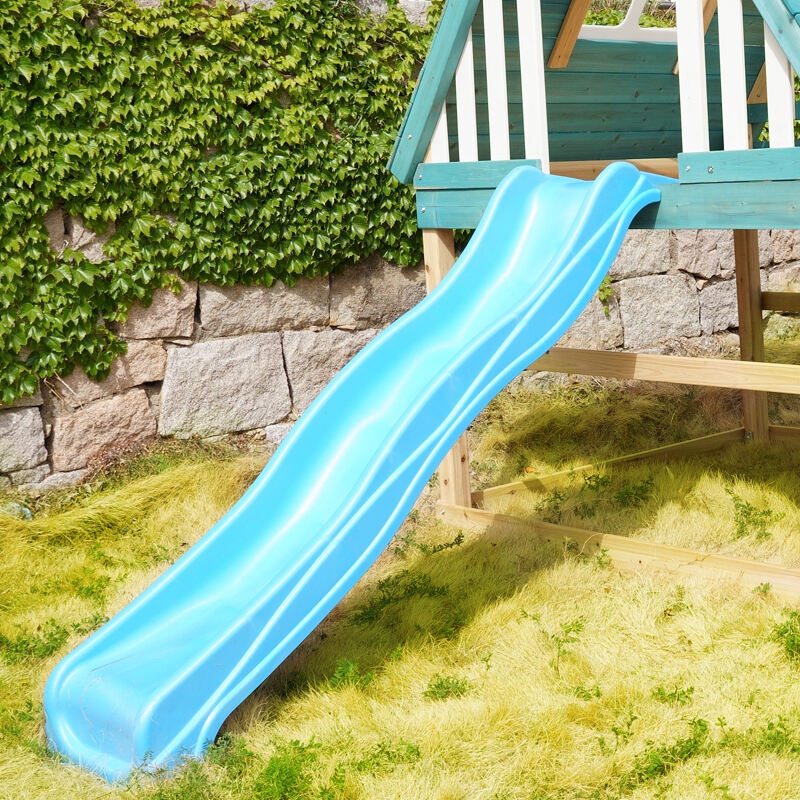
School-age playground equipment often includes more complex climbing structures, longer slides, and challenging overhead activities like monkey bars or rope courses. Safety zones must extend further from equipment due to increased activity levels and movement patterns. Supervision sight lines become important, allowing adults to monitor multiple children engaged in various activities across the playground area.
Different age groups achieve distinct physical development milestones that playground equipment should support and challenge appropriately. Toddlers focus on developing gross motor skills like walking, climbing, and balancing. Playground set features for this age should include low ramps, wide steps, and stable platforms that encourage movement while building confidence.
Preschoolers develop more refined motor control and coordination, benefiting from equipment that challenges balance, spatial awareness, and bilateral coordination. Activities like spinning, swinging, and climbing help develop vestibular and proprioceptive systems crucial for later academic and physical success. Equipment should provide varied sensory experiences through different textures, movements, and interactive elements.
School-age children refine complex motor skills and develop strength, endurance, and coordination necessary for organized sports and activities. Playground equipment should challenge upper body strength, cardiovascular fitness, and complex movement patterns. Features like climbing walls, challenging overhead activities, and equipment requiring strategic thinking support this developmental stage.
Playground equipment significantly impacts cognitive and social development across age groups. Toddlers use playground experiences to explore cause-and-effect relationships, spatial concepts, and basic problem-solving skills. Equipment should provide simple interactive elements that respond to child actions, supporting cognitive development through play.
Preschoolers engage in more complex imaginative play, using playground structures as props for elaborate scenarios. A well-designed playground set supports this development with themed elements, role-play opportunities, and spaces that encourage social interaction. Equipment should facilitate both independent and cooperative play experiences.
School-age children use playground equipment to develop leadership skills, negotiate social hierarchies, and practice conflict resolution. Complex playground structures that require cooperation, turn-taking, and strategic thinking support these developmental needs. Equipment should provide challenges that groups can tackle together while accommodating individual skill differences.
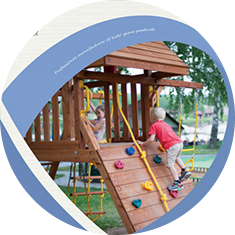
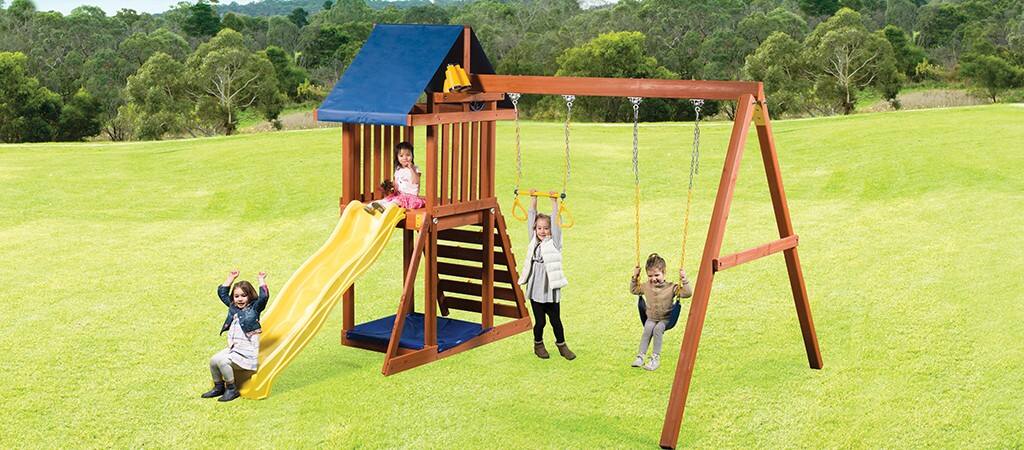
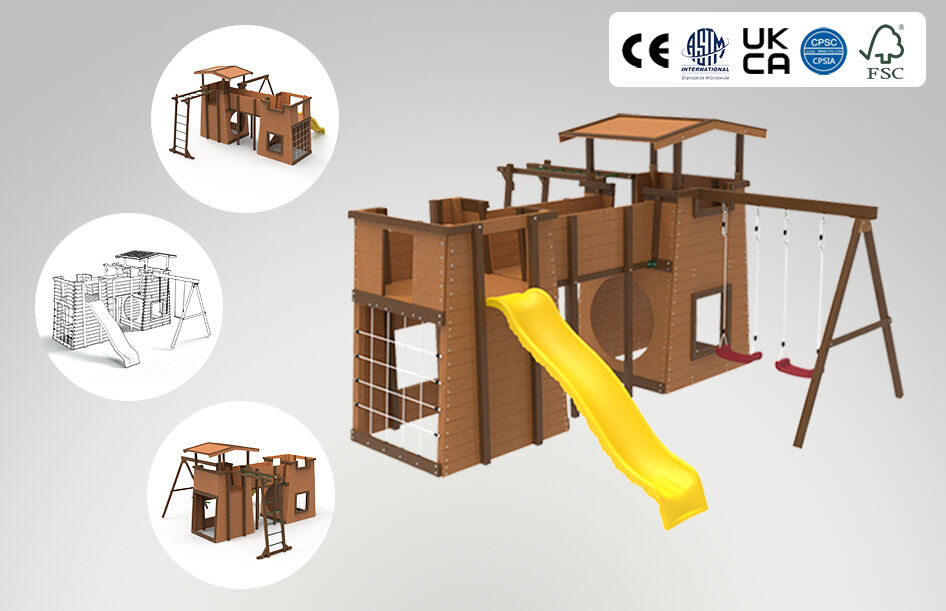
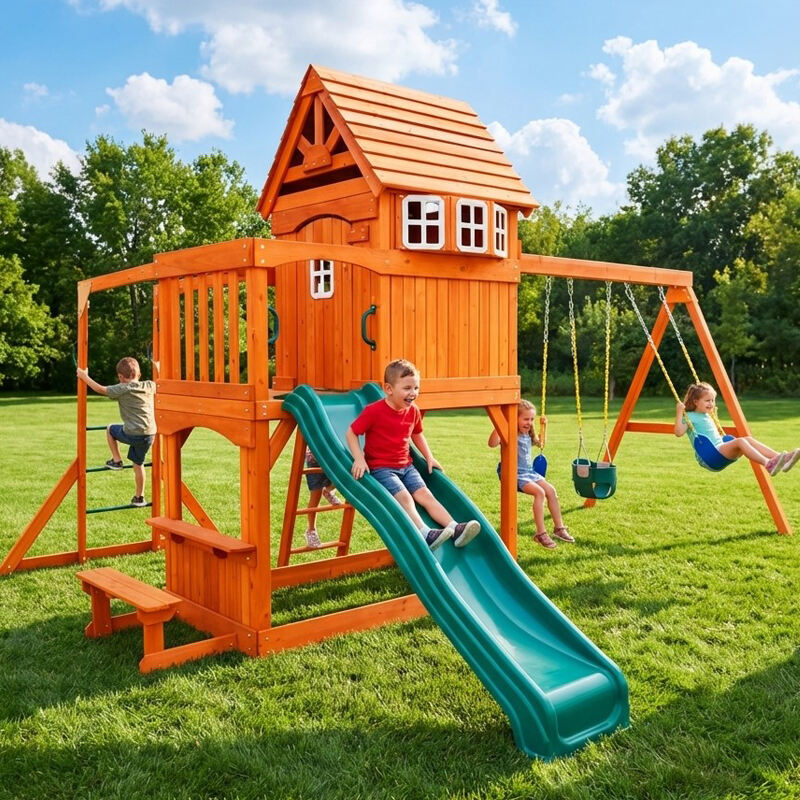
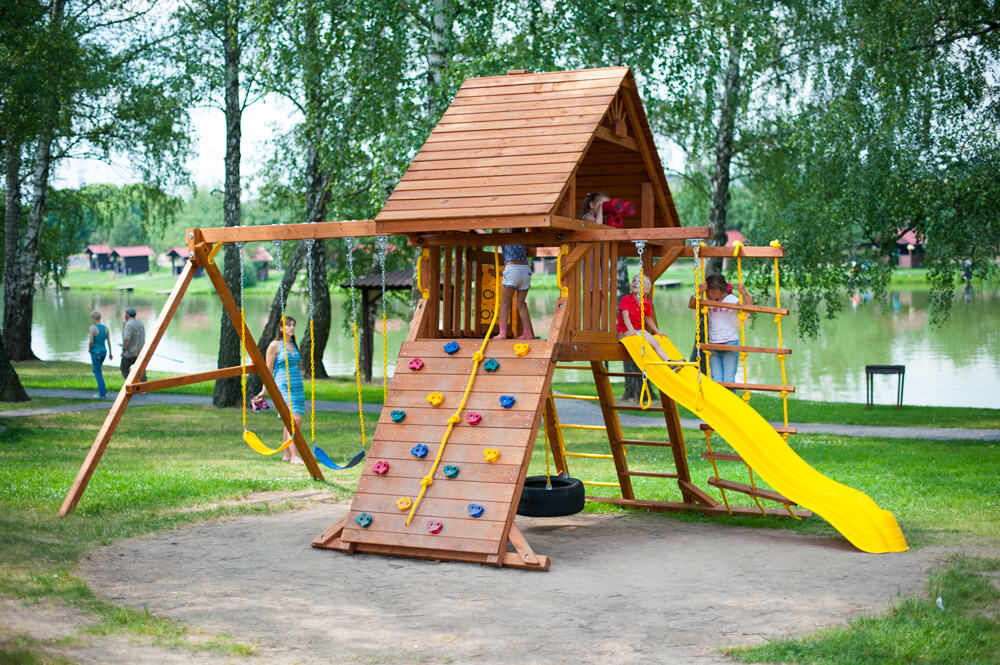
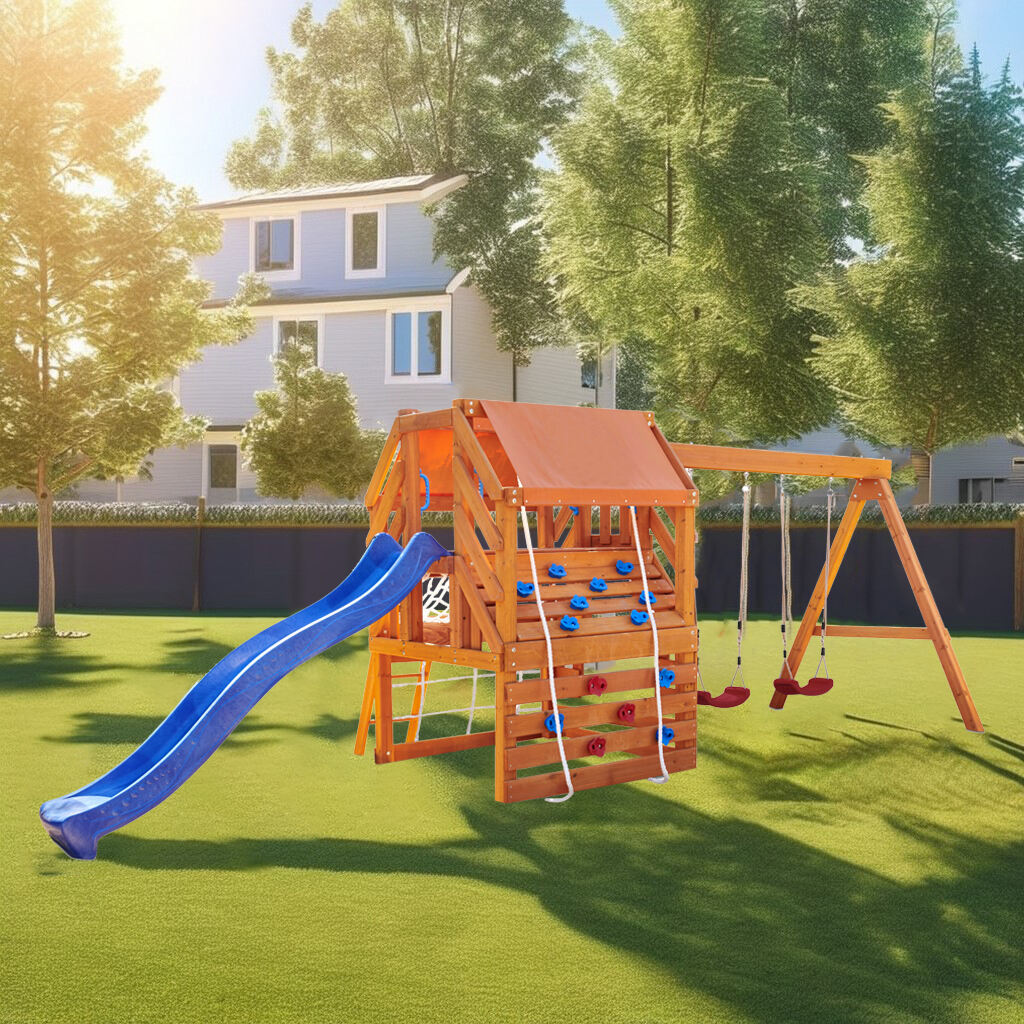
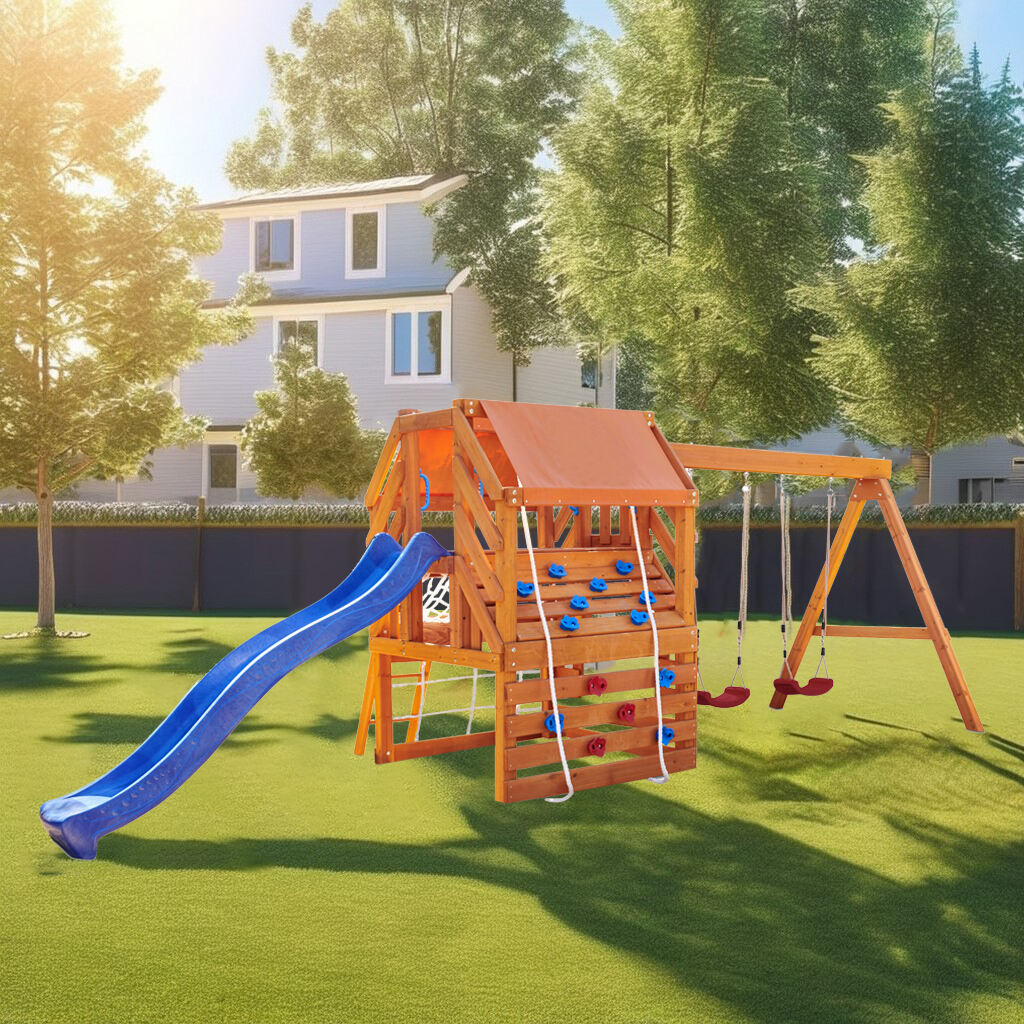
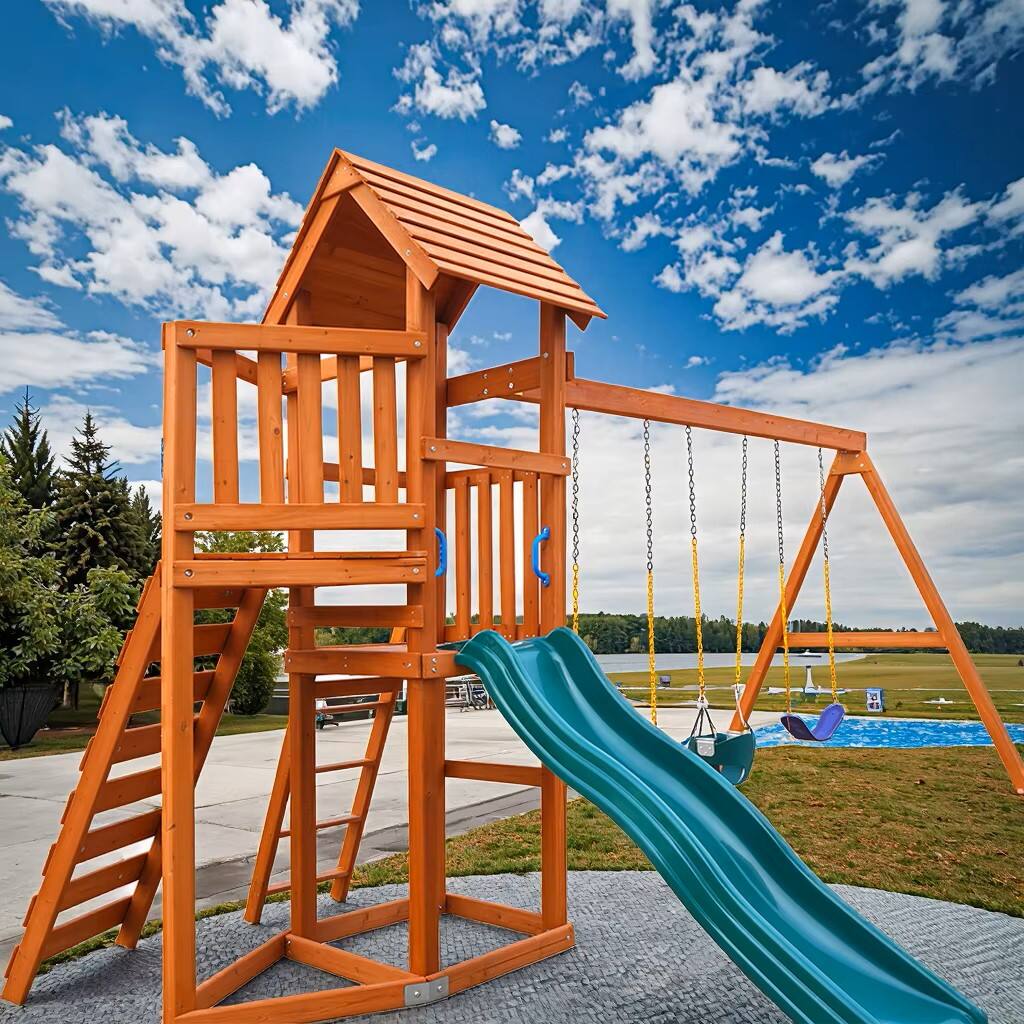
Wooden playground equipment offers natural aesthetics and environmental benefits when properly constructed and maintained. Quality wooden playground structures use naturally rot-resistant woods like cedar or redwood, or pressure-treated lumber that meets safety standards for playground use. The wood must be properly sealed and maintained to prevent splintering, weathering, and deterioration.
Wooden playground set construction requires attention to hardware quality, joint integrity, and finish safety. All hardware should be corrosion-resistant and designed for outdoor use, with no protruding bolts or sharp edges that could cause injury. Regular maintenance schedules help ensure wooden equipment remains safe and attractive throughout its service life.
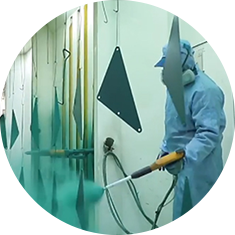
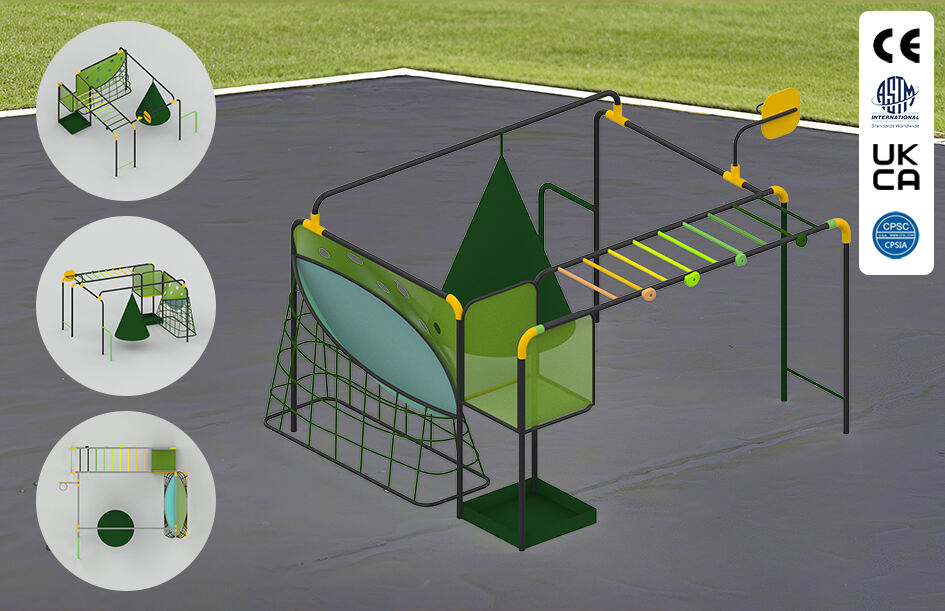
Metal playground equipment, typically constructed from galvanized steel or aluminum, offers excellent durability and lower maintenance requirements. These materials resist weathering, vandalism, and heavy use while maintaining structural integrity over extended periods. Powder coating and other protective finishes help prevent corrosion while providing attractive color options.
Composite materials combine the benefits of various substances to create playground components that resist fading, cracking, and weathering. These materials often incorporate recycled content, supporting environmental sustainability goals while providing excellent performance characteristics. Composite decking, panels, and play components offer consistent appearance and performance with minimal maintenance requirements.
Safety surfacing underneath and around playground equipment plays a crucial role in injury prevention across all age groups. Materials must provide appropriate impact attenuation based on the critical fall height of equipment while maintaining accessibility for children with disabilities. Options range from loose-fill materials like engineered wood fiber to unitary surfaces like poured-in-place rubber.
Maintenance requirements vary significantly among safety surface options, affecting long-term costs and safety performance. Loose-fill materials require regular replenishment and leveling to maintain proper depth and coverage. Unitary surfaces typically require less maintenance but may need professional repair when damaged. Climate considerations also affect surface selection, as some materials perform better in specific weather conditions.
Proper playground set installation requires adequate space allocation for equipment, safety zones, and circulation areas. Each piece of equipment needs specific use zones and fall zones that must not overlap with other equipment or site features. Age-appropriate separation helps prevent conflicts between different user groups while allowing appropriate supervision.
Site circulation patterns should accommodate emergency vehicle access, maintenance equipment, and daily user traffic flow. Pathways must meet accessibility requirements while connecting different play areas logically. Adequate space for parent supervision, seating, and storage also contributes to successful playground design and operation.
Environmental conditions significantly impact playground equipment selection and performance. Sun exposure, prevailing winds, drainage patterns, and local climate affect material choices, equipment orientation, and site features. Shade structures may be necessary in hot climates, while wind barriers might be required in exposed locations.
Accessibility requirements ensure that children with disabilities can participate in playground activities alongside their peers. Equipment selection should include accessible routes, transfer platforms, and activities that accommodate various ability levels. Universal design principles create inclusive playground environments that benefit all users while meeting regulatory requirements.
Systematic playground equipment inspection helps identify potential safety hazards before they become serious problems. Daily visual inspections by trained staff can catch obvious issues like broken components, vandalism, or debris accumulation. More comprehensive monthly inspections examine structural integrity, hardware tightness, and wear patterns that require professional attention.
Annual professional inspections by certified playground safety inspectors provide detailed assessments of equipment condition and compliance with safety standards. These inspections help prioritize maintenance activities, budget for replacements, and document due diligence for liability protection. Proper documentation of all inspections and maintenance activities creates valuable records for future planning.
Preventive maintenance programs extend playground equipment life while maintaining safety performance. Regular cleaning, lubrication, and minor repairs prevent small issues from becoming major problems. Seasonal maintenance activities like hardware tightening, surface material replenishment, and protective coating application help equipment weather environmental challenges.
Replacement part availability and manufacturer support affect long-term playground set viability. Selecting equipment from established manufacturers with good warranty programs and parts availability helps ensure continued operation and safety compliance. Planning for component replacement and upgrade cycles helps maintain budget predictability while keeping equipment current with safety standards.
Playground equipment represents a significant investment that requires careful financial planning and value analysis. Initial costs include equipment purchase, site preparation, installation, and safety surfacing. Quality equipment with proper installation often provides better long-term value despite higher upfront costs, due to reduced maintenance requirements and longer service life.
Financing options for playground projects include grants, fundraising campaigns, phased installation plans, and equipment leasing programs. Many communities successfully combine funding sources to achieve playground goals while managing budget constraints. Professional consultation during planning stages helps optimize equipment selection for available budgets while meeting safety and programming objectives.
Operational costs significantly impact total playground ownership expenses over equipment lifetime. Maintenance labor, replacement parts, safety surface replenishment, and periodic upgrades contribute to ongoing costs. Equipment selection should consider these factors alongside initial purchase price to determine true lifecycle value.
Insurance and liability considerations also affect operational costs, with well-maintained equipment typically receiving better coverage terms. Proper documentation of maintenance activities, safety compliance, and user supervision helps manage risk while potentially reducing insurance premiums. Professional risk management consultation can help optimize playground operation while controlling costs.
Generally, children within the same developmental age range can safely share playground equipment. The standard age groupings are 6-23 months, 2-5 years, and 5-12 years. However, equipment designed for 2-5 year olds can sometimes accommodate mature 5-year-olds and younger school-age children with proper supervision. Mixed-age play is possible when equipment includes varied difficulty levels and appropriate safety features for the youngest users.
Safety zones around playground equipment must extend at least 6 feet in all directions from stationary equipment, and up to the height of the equipment plus 4 feet for moving equipment like swings. For equipment over 4 feet tall, fall zones may need to extend even further. Additionally, equipment pieces should be spaced far enough apart that their use zones and fall zones do not overlap, ensuring children have adequate space to play safely.
Playground equipment requires daily visual inspections for obvious hazards, weekly functional inspections of moving parts and high-wear components, monthly comprehensive inspections of all equipment and safety surfacing, and annual professional inspections by certified playground safety inspectors. Additionally, seasonal maintenance tasks like hardware tightening, surface material maintenance, and protective coating application should be scheduled based on manufacturer recommendations and local climate conditions.
Playground equipment should comply with standards established by organizations like ASTM International, the Consumer Product Safety Commission, and the International Play Equipment Manufacturers Association. Look for manufacturer certifications, compliance documentation, and third-party testing reports. Professional playground safety inspectors can assess existing equipment for standard compliance, while new equipment should come with proper certification documentation from reputable manufacturers.
Hot News2025-12-26
2025-12-22
2025-12-19
2025-12-11
2025-12-03
2025-11-03