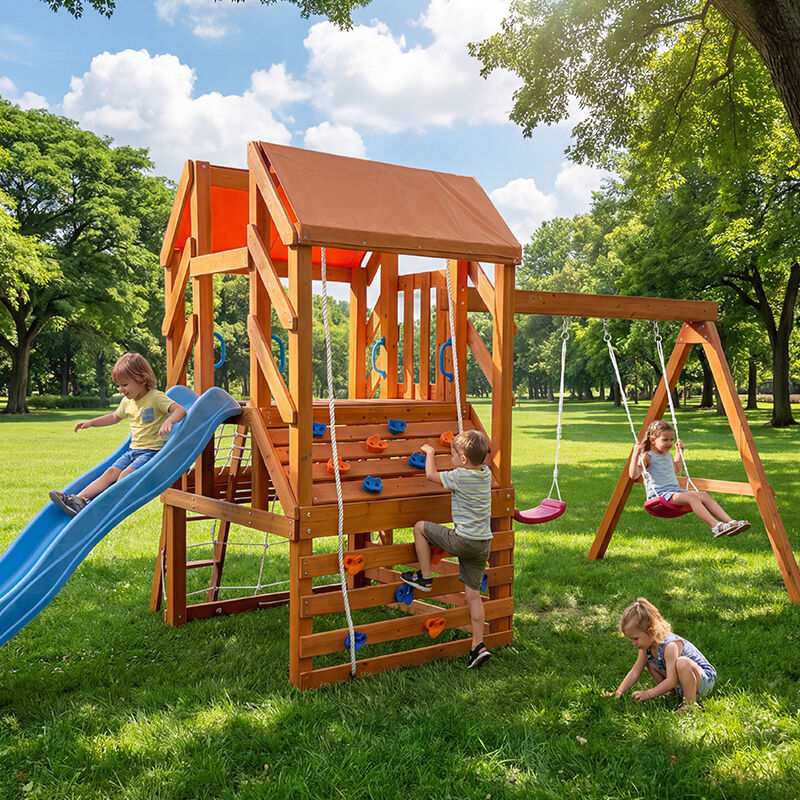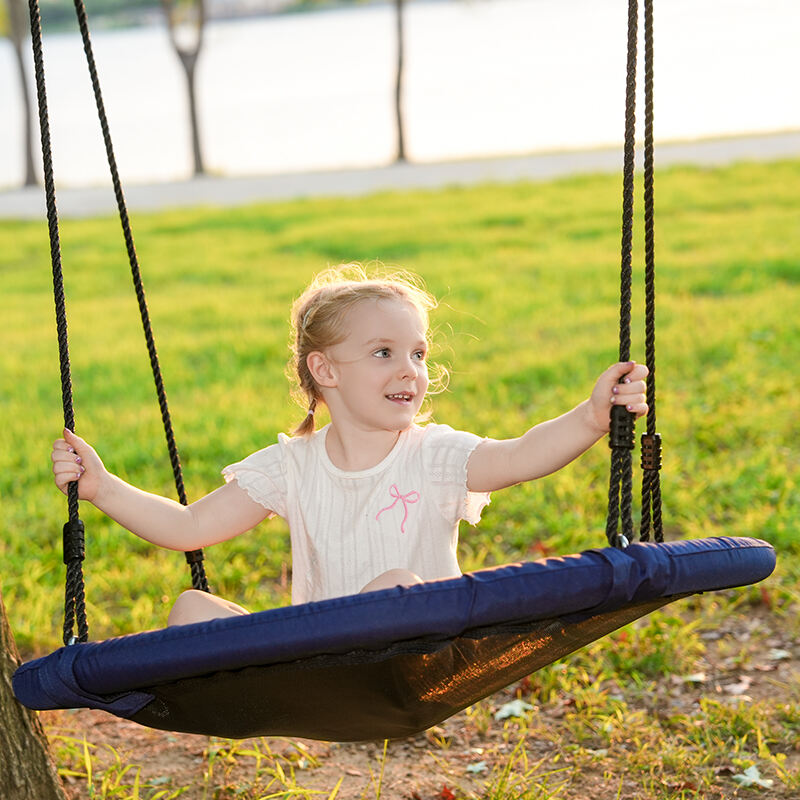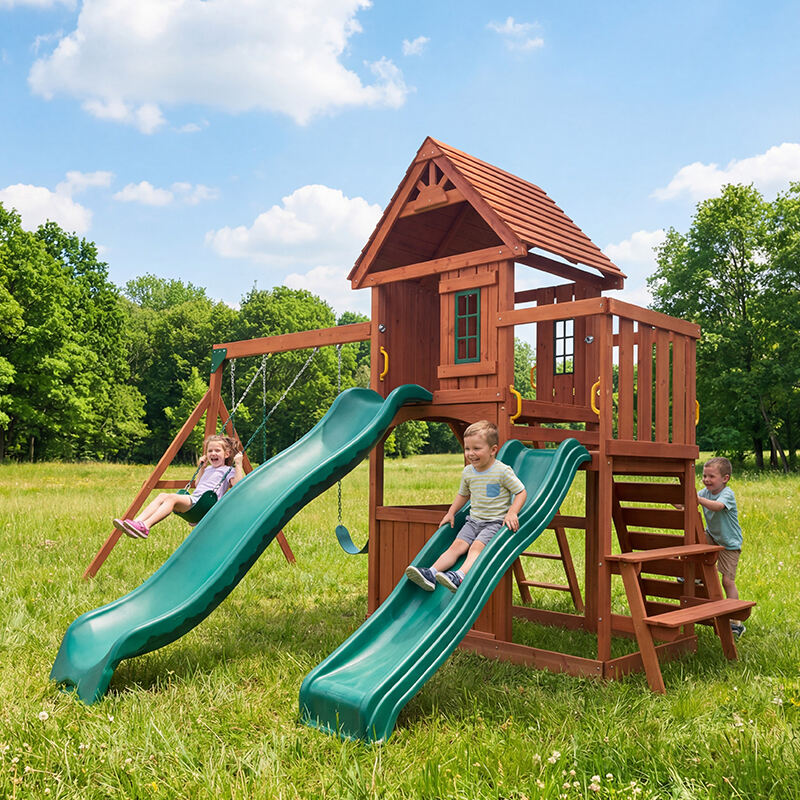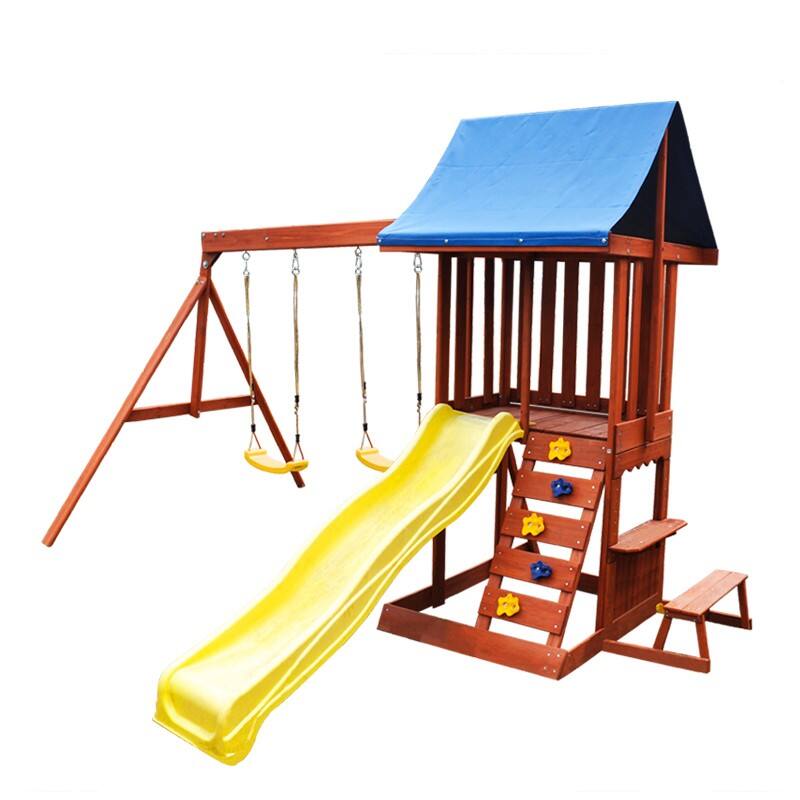
Modern childhood increasingly revolves around digital screens and indoor entertainment, making outdoor physical activity more crucial than ever for healthy child development. A well-designed swing set serves as a powerful catalyst for encouraging children to engage with nature while simultaneously building essential motor skills that form the foundation of their physical capabilities. These playground structures offer far more than simple entertainment, functioning as comprehensive development tools that combine fun with fundamental skill-building in ways that captivate young minds and bodies.
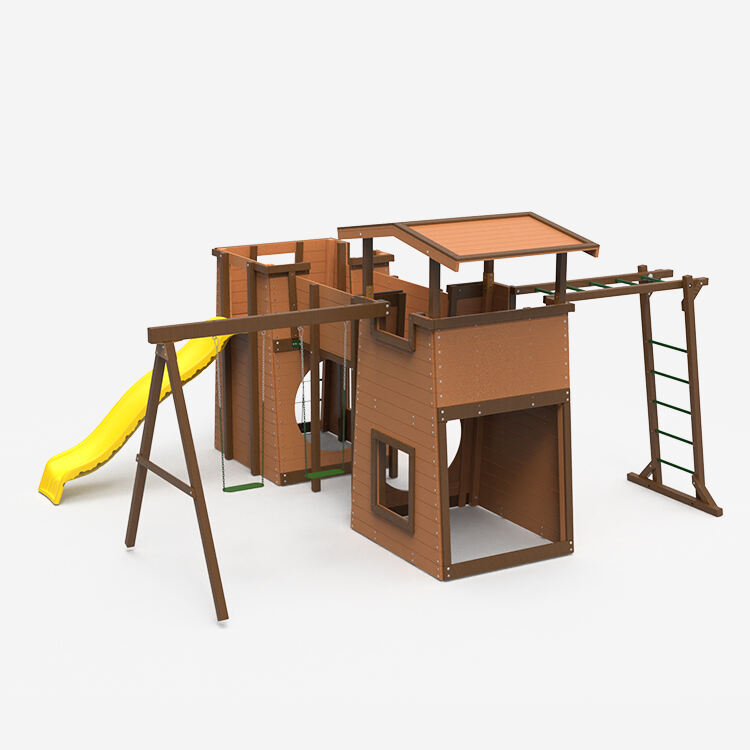
Swinging motions naturally engage multiple muscle groups simultaneously, creating an ideal environment for developing core strength and postural control. Children must maintain their balance while coordinating arm and leg movements to generate momentum, which strengthens their abdominal muscles, back muscles, and hip stabilizers. This continuous engagement of stabilizing muscles helps establish the foundation for more complex physical activities as children grow and develop.
The rhythmic nature of swinging also enhances proprioceptive awareness, teaching children to understand their body position in space. This spatial awareness becomes crucial for activities ranging from riding bicycles to participating in organized sports, making early exposure to swinging motions particularly valuable for long-term physical development.
Operating a swing set requires precise coordination between upper and lower body movements, timing these actions to maintain and increase momentum. Children learn to pump their legs at specific moments while adjusting their grip and posture, developing bilateral coordination that transfers to numerous other physical activities throughout their lives.
This coordination development extends beyond simple swinging, as children who regularly use playground equipment demonstrate improved hand-eye coordination in academic and recreational activities. The complex neural pathways developed through swing set use contribute to enhanced motor planning abilities that benefit everything from handwriting to athletic performance.
The vestibular system, located in the inner ear, plays a critical role in balance, spatial orientation, and movement coordination. Regular swing set use provides controlled vestibular stimulation that helps children develop a robust sense of balance and spatial awareness. This stimulation occurs through the linear and rotational movements inherent in swinging, which challenge the vestibular organs in beneficial ways.
Children with well-developed vestibular systems demonstrate better focus, attention spans, and academic performance, as this sensory system directly influences cognitive function. The gentle, rhythmic motion of swinging provides therapeutic vestibular input that can be particularly beneficial for children with sensory processing challenges or attention difficulties.
Swing sets offer rich sensory experiences that help children process and integrate multiple types of sensory information simultaneously. The combination of movement, touch, visual input, and proprioceptive feedback creates a comprehensive sensory experience that strengthens neural connections throughout the developing brain.
This multi-sensory engagement helps children develop better sensory modulation skills, enabling them to appropriately respond to various environmental stimuli. Children who regularly engage with swing set equipment often demonstrate improved tolerance for sensory experiences and better self-regulation abilities in classroom and social settings.
Mastering the skills required to use a swing set effectively provides children with tangible achievements that build self-confidence and self-efficacy. The progression from needing assistance to swinging independently represents a significant developmental milestone that children can recognize and celebrate, fostering a positive relationship with physical challenges.
This confidence extends beyond playground activities, as children who experience success in physical challenges often demonstrate greater willingness to attempt new activities and persist through difficulties. The swing set becomes a training ground for resilience and determination that serves children well in academic and social situations.
Playground environments naturally facilitate social interactions as children negotiate turn-taking, engage in imaginative play, and communicate about their experiences. Swing sets often become focal points for peer interaction, where children learn essential social skills such as sharing, cooperation, and conflict resolution.
These social learning opportunities occur organically during play, making them particularly effective for developing communication skills and emotional intelligence. Children learn to express their needs, understand others' perspectives, and work together to create enjoyable play experiences that benefit everyone involved.
The complex motor planning required for effective swing set use engages executive function skills including working memory, cognitive flexibility, and inhibitory control. Children must remember the sequence of movements, adapt their strategies based on results, and control their impulses to maintain safety while maximizing enjoyment.
These executive function skills directly transfer to academic performance, as children who develop strong motor planning abilities often demonstrate better organizational skills, problem-solving capabilities, and attention regulation in classroom settings. The swing set serves as an engaging platform for developing these crucial cognitive abilities.
Using swing sets introduces children to fundamental physics concepts including momentum, gravity, force, and energy transfer through hands-on experimentation. Children naturally discover that pumping their legs at certain times increases their swing height, while different body positions affect their swinging experience.
This intuitive understanding of physical principles provides an excellent foundation for later formal education in science and mathematics. Children who regularly engage with swing sets often demonstrate enhanced spatial reasoning abilities and better intuitive understanding of mathematical concepts related to patterns, timing, and cause-and-effect relationships.
Regular swing set use provides moderate cardiovascular exercise that helps establish healthy fitness habits from an early age. The sustained activity involved in swinging elevates heart rate and promotes cardiovascular health while remaining enjoyable and age-appropriate for developing bodies.
Children who develop positive associations with physical activity through playground experiences are more likely to maintain active lifestyles throughout their lives. The swing set serves as an introduction to the joy of movement that can influence lifelong health and wellness choices.
The varied movements required for swing set use engage multiple muscle groups including arms, legs, core, and back muscles in functional movement patterns. This comprehensive muscle engagement helps children develop balanced strength and endurance that supports overall physical development and injury prevention.
Unlike isolated exercise activities, swing set play integrates strength building with enjoyable movement patterns that children naturally want to repeat. This integration makes it an ideal tool for promoting healthy physical development without the need for structured exercise routines that may feel burdensome to young children.
Most children can begin using appropriately sized swing sets with supervision around 12-18 months, progressing to independent use between ages 3-4 years. The specific timeline depends on individual motor development, with some children ready earlier and others needing additional time to develop the necessary coordination and strength.
Regular daily play sessions of 20-30 minutes provide optimal benefits for motor skill development, though even shorter periods can be beneficial. Consistency is more important than duration, with frequent exposure helping children build and maintain the neural pathways essential for motor learning and development.
Swing sets can provide valuable therapeutic benefits for children with various developmental challenges, including autism, sensory processing disorders, and motor delays. However, it is important to consult with occupational therapists or other healthcare professionals to ensure appropriate use and modifications based on individual needs and abilities.
Key safety factors include age-appropriate sizing, proper installation and anchoring, regular maintenance checks, and adequate ground clearance and fall zones. Parents should also ensure the swing set meets current safety standards and provides appropriate challenges without exceeding their child's developmental capabilities.
 Hot News
2026-01-29
2026-01-15
2026-01-28
2026-01-30
2026-01-31
2025-12-26
PAFIC PLAY is a trusted global supplier of playground sets, swing sets, and outdoor kids’ fitness equipment. We provide customized OEM & ODM playground solutions for schools, communities, and recreational spaces.
1, PAFIC DRIVE JIAOBEI INDUSTRIAL ZONE JIAOZHOU, QINGDAO, CHINA
Copyright © 2026 China Qingdao Pafic Hardware Co., Ltd. All rights reserved. Privacy Policy